A fire in a Gulfport, MS home or business does not end when the flames are out. The next 24 to 72 hours determine how much of the structure can be restored in place and how much will need to be removed and rebuilt. That window is even shorter on the Mississippi Gulf Coast, where high humidity and warm temperatures accelerate corrosion, odor penetration, and microbial growth in materials saturated by firefighting water.
This guide covers what Gulfport property owners should do after a fire, why the restoration process differs from a simple cleanup, and how to document the loss so the insurance process stays organized.
Immediate safety after a fire
Do not re-enter the building until the fire department has released it. Structural members, ceilings, and flooring can be compromised in ways that are not visible from the outside. Smoke and soot particles can also be hazardous to breathe, especially for children, older adults, and anyone with respiratory conditions.
Once the property is released, the first practical priorities are:
- Secure the utilities. Electricity and gas should remain off until a licensed professional confirms they are safe. If the fire department shut off the gas, do not turn it back on yourself.
- Board up openings and tarp the roof. Broken windows, burned doors, and roof holes expose the interior to rain, wind, and trespassers. Emergency board-up and tarping are standard first steps in every fire restoration project.
- Limit traffic inside. Soot is abrasive and acidic. Walking through affected rooms can grind soot deeper into carpets, flooring, and HVAC systems.
The first 24 hours: what matters most
The first phase of fire restoration is stabilization. Three things are usually happening at once:
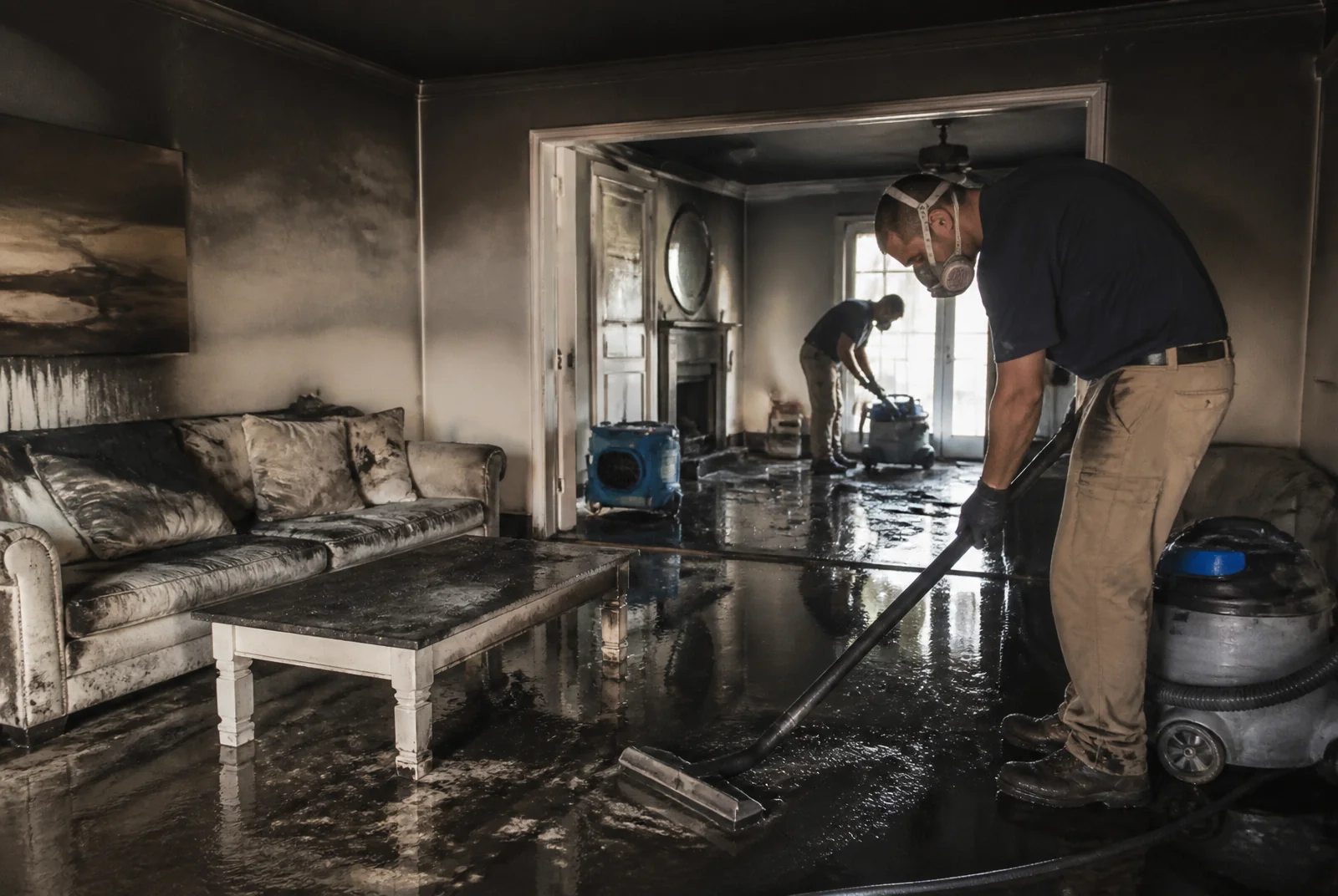
- Water extraction and drying. The water used to suppress the fire may still be sitting in carpets, pad, drywall, and insulation. In Gulfport humidity, that water needs to be extracted and the structure dried immediately to prevent secondary damage.
- Soot and smoke cleaning. Soot bonds to surfaces more strongly the longer it sits. Dry cleaning, HEPA vacuuming, and wet cleaning methods are selected based on the type of smoke residue and the material affected.
- Odor control planning. Smoke odor lingers because microscopic particles settle into porous materials. Source removal handles most of the problem; remaining odor is addressed with professional deodorization equipment.
Smoke and soot damage in Gulfport homes
Not all fire damage is from flames. In many Gulfport residential fires, the majority of the damage is smoke and soot residue. The residue type matters because different fires produce different smoke:
- Dry smoke from fast-burning, high-heat fires produces fine, powdery residue that can be smeared if cleaned improperly.
- Wet smoke from slow-burning, low-heat fires is sticky and smeary, often clinging to vertical surfaces and inside cabinets.
- Protein residue from kitchen fires is nearly invisible but produces a strong, persistent odor.
- Fuel oil soot from furnace puff-backs can coat surfaces and contents in a thin, oily film.
Gulfport has a mix of older homes, newer construction, and commercial properties along the coast. Each building type presents different materials and access challenges. Older homes may have plaster, lath, and hardwood that respond differently to cleaning than modern drywall and engineered flooring.
Water damage from firefighting efforts
Firefighting introduces a large amount of water in a short time. That water often reaches places the fire did not. Saturated insulation behind walls, water pooled in crawl spaces, and moisture trapped in HVAC ductwork are common after a structure fire in Gulfport.
If that water is not extracted and dried quickly, it creates the same problems as any major water loss: warped flooring, swollen drywall, mold growth, and compromised structural materials. Fire restoration projects on the Gulf Coast almost always include a water mitigation phase before cleaning and reconstruction can begin.
What professional fire damage restoration includes
A full-service restoration company handles the entire recovery chain, which keeps the project coordinated and the documentation consistent. Typical scope includes:
- Emergency board-up and roof tarping
- Water extraction and structural drying
- Soot and smoke cleaning on walls, ceilings, contents, and structural surfaces
- Content pack-out, cleaning, and storage when needed
- HVAC and duct cleaning to prevent recontamination
- Odor control and deodorization
- Demolition of non-salvageable materials
- Reconstruction to restore the property to pre-loss condition
- Itemized documentation for the insurance carrier
The key is that fire restoration is not just cleaning. It is a sequence of controlled phases, each with its own standards and verification points.
Why local experience matters on the Gulf Coast
Gulfport's climate and building stock create specific restoration challenges. High humidity makes drying slower without commercial dehumidification. Older homes in neighborhoods like downtown Gulfport, North Gulfport, and along the bayfront may have materials that require specialized cleaning methods. Proximity to the water also means properties can be exposed to salt air, which affects both corrosion and odor retention.
A restoration company that works regularly in Gulfport and the surrounding Harrison County communities understands these conditions and can build a scope that accounts for them.
Insurance documentation after a fire
Fire claims are usually large and detailed. Insurance carriers need clear evidence of what was damaged, why it was removed, and what was done to stabilize and restore the property. A strong documentation package includes:
- First-arrival photos and video of the affected areas
- A written scope describing every affected material and the planned mitigation
- Moisture logs and drying readings, if water mitigation is involved
- Content inventories and condition reports
- Invoices separated into emergency mitigation and reconstruction phases
We do not make coverage decisions, but we can provide the documentation that helps the carrier apply whatever coverage the policy provides. See our insurance claim assistance page for how we support the claims process.
When to call a fire restoration company in Gulfport
Call as soon as the property is safe to enter. The most important restoration work happens in the first 24 to 48 hours. Waiting for the adjuster to visit before securing the structure or removing water can turn a manageable fire restoration into a much larger reconstruction project.
Rapid Mitigation & Restoration Services provides 24/7 fire damage response across Gulfport, Biloxi, Long Beach, Pass Christian, and the rest of the Mississippi Gulf Coast. We handle emergency board-up, water extraction, smoke and soot cleanup, odor control, and reconstruction.
The bottom line
Fire damage in Gulfport, MS is not just about what burned. It is about what the fire, smoke, and firefighting water affected, and how quickly the restoration process begins. The property that responds within the first day is almost always the property that costs less and returns to normal faster. If you have experienced a fire or have questions about the restoration process, call us at any time.
Frequently Asked Questions
Related Services
Soot removal, odor control, structural cleaning, and reconstruction coordination after fire damage.
Soot, residue, HVAC pathways, and smoke odor cleanup after fire events.
Emergency water extraction, structural drying, and full restoration for homes and businesses across the Mississippi Gulf Coast.