
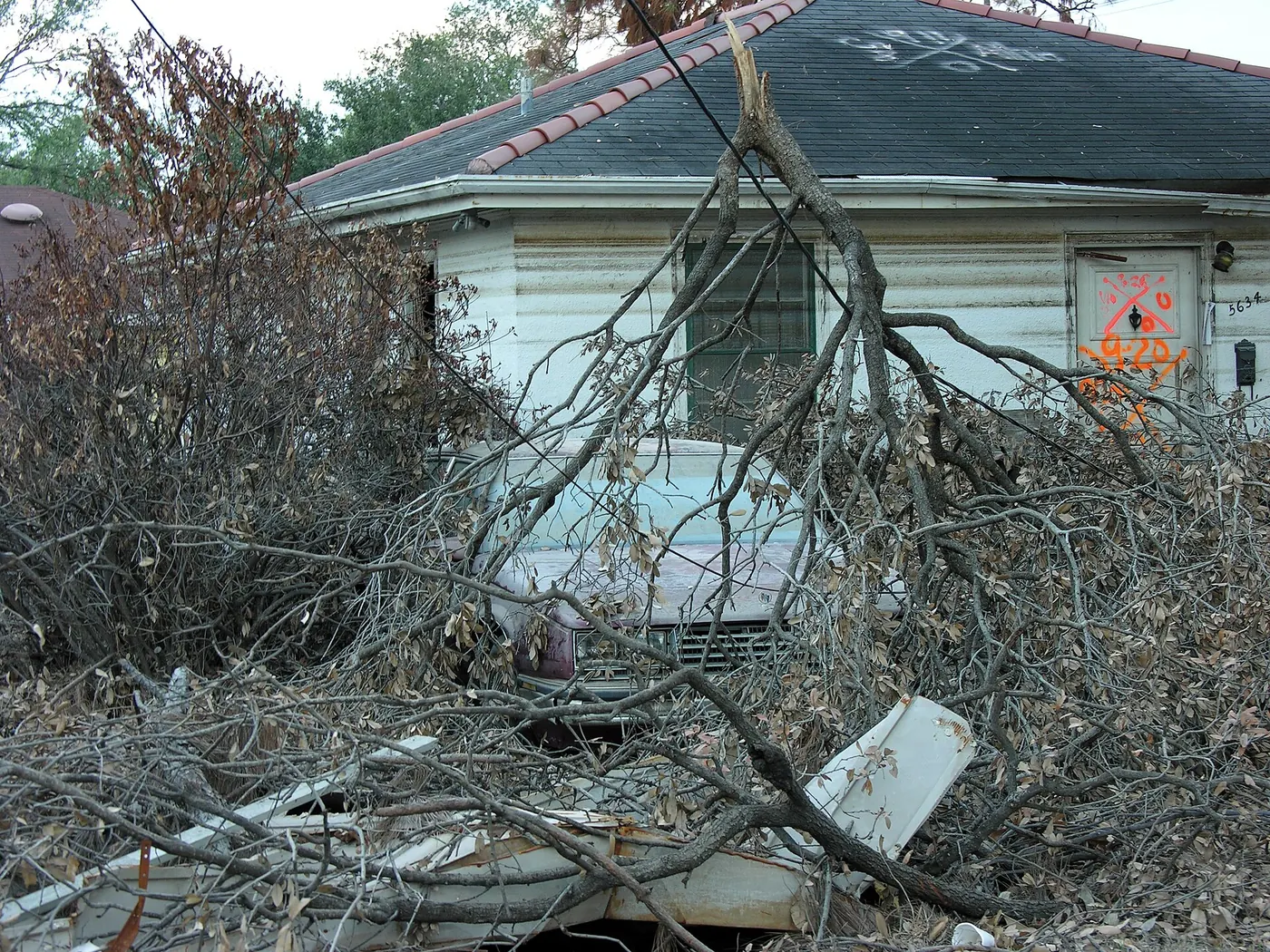
Living in New Orleans means living with hurricanes. Anyone who has been here longer than a season has a Katrina story, an Ida story, an Ike story, or a Francine story. The question is never "if" — the question is how prepared you are when the next storm makes landfall, and how quickly you can move once it has passed.
This is our restoration playbook for New Orleans homeowners and business owners — what to do before the storm, what to do in the first 72 hours after, how to work with your insurance carrier, and how to avoid the storm-chaser contractors who roll into town the moment the wind dies down.
Before the storm: preparation that actually matters
Most pre-storm advice you read online is checklist filler. Stock water, charge phones, fill the bathtub. Useful, but not what determines whether your property survives.
Document the pre-loss condition of your property
This is the single most valuable thing a homeowner or property manager can do, and almost nobody does it.
Walk every room with your phone in video mode. Open every cabinet. Pan across every wall. Capture the contents. Step outside and video the roof, the siding, the windows, the HVAC, the fence, and the vehicles. Save it to cloud storage with a date stamp.
If a tropical system is approaching, do it again the day before landfall. After the storm, that video is the single best evidence you have for proving what was there, what condition it was in, and what got damaged. Insurance disputes routinely come down to "prove this damage didn't already exist" — and pre-storm video ends those disputes immediately.
Confirm your insurance coverage now, not after
The week before a storm is the worst time to learn that your wind/hail deductible is 5% of dwelling coverage instead of a flat dollar amount, or that you don't have NFIP flood coverage at all, or that your business interruption coverage only kicks in after 72 hours.
Pull your policies. Read the declarations page. Know your:
- Wind/hail deductible (frequently a percentage in New Orleans, often 2% to 5%)
- Whether you carry a separate hurricane deductible
- Whether you have NFIP or private flood coverage
- Whether your contents are covered at replacement cost or actual cash value
- For commercial properties, your business interruption waiting period and limit
If you find a gap, you can sometimes still close it — but not in the 72 hours before landfall, when most carriers impose binding moratoriums.
Pre-engage a restoration company
Local restoration capacity gets consumed in the first six hours after a major storm. The companies that respond first are the companies that already have you on file. Many New Orleans homeowners and property managers establish a no-cost priority response agreement with a local restoration firm before hurricane season starts — we do this with property managers across New Orleans, Metairie, Kenner, Slidell, Mandeville, and Covington.
The first 72 hours after the storm
Once the wind dies down and it is safe to move, the clock starts. Mold grows fast in New Orleans humidity. Drywall wicks fast. Hardwood cups fast. Every hour matters.
Safety first — and we mean it
Post-storm conditions kill more people than the storm itself. Before you enter any damaged structure:
- Confirm the structure is not in danger of collapse. If you see major cracks, leaning walls, or a sagging roofline, do not enter.
- Assume every downed wire is energized. Stay back.
- Floodwater contains sewage, hydrocarbons, sharps, and wildlife. Wear boots, gloves, eye protection, and an N95 minimum.
- Gas leaks are common after major storms. If you smell gas, leave immediately and call the utility from outside.
- Generators kill people. Never run one inside a garage, a basement, or near any window or door.
Document the post-loss condition
Before you move anything, walk the property again with video. Same routine as the pre-storm walk — every room, every wall, the exterior, the roof from ground level (do not climb onto a damaged roof). Open windows and doors are evidence. Standing water is evidence. The high-water mark on the wall is the most important single piece of evidence in a flood claim.
Emergency board-up and tarping
If windows are broken or the roof is open, the property needs to be secured before anything else. Two reasons:
- Weather. A second rain event without a roof or sealed envelope can cause more damage than the original storm.
- Insurance. Most policies require the insured to mitigate further loss. A property left exposed for days is a property the carrier can dispute later.
Board-up should be done with proper plywood (typically 1/2" or 5/8") secured into the studs around the opening — not just stapled to the trim. Roof tarping should use heavy-duty tarp material, secured with battens screwed into the deck, lapped properly across the ridge, and extended below the damaged area by at least four feet. A bad tarp causes more leaks than the original damage.
Water extraction and structural drying
If floodwater entered the structure, the priority order is:
- Extraction. Truck-mounted extraction is the only practical option for typical New Orleans flood volumes — usually thousands of gallons per home. Shop vacs and submersible pumps are not equipment for this job.
- Demolition of unsalvageable porous materials. Floodwater is Category 3 by definition. Carpet pad, drywall to the high-water mark (plus 2 to 4 inches), insulation, and most kraft-faced or particleboard cabinetry come out. The IICRC S500 standard documents what should be removed and why.
- Structural drying. Once unsalvageable materials are out, the remaining structure — studs, subfloor, sheathing — has to be dried to a defensible standard with commercial equipment.
- Antimicrobial application. Before reconstruction starts, exposed framing and substrate get treated with an EPA-registered antimicrobial. This is what stops mold from showing up six weeks later in a freshly painted wall.
Why structural drying is non-negotiable after a New Orleans flood
New Orleans averages above 80% relative humidity for most of the year. After a flood, ambient conditions alone will not dry a structure — they will, at best, hold the moisture in place while mold colonizes. Drying requires mechanical equipment, properly sized to the load, monitored daily.
A typical post-flood drying setup for a single-story New Orleans home includes:
- High-CFM axial air movers at the perimeter of every wet area
- One or more LGR (low-grain refrigerant) dehumidifiers sized to the cubic footage and moisture load
- For large losses, supplemental desiccant dehumidification ducted in from outside
- Containment plastic isolating the drying area from any unaffected portion of the building
- Daily moisture meter readings at fixed, marked locations, with the readings logged and provided to the carrier
The job is done when readings at affected locations match readings at unaffected reference locations elsewhere in the structure — not when the floor feels dry to the foot, and not on a calendar.
Mold prevention: the hidden cost of a slow response
Most of the "hurricane mold" homeowners describe to us six weeks after a storm is preventable. It happens because the structure was not dried to standard before reconstruction started, or because porous materials that should have been removed were dried in place to save money, or because reconstruction trapped moisture inside wall cavities.
The right post-flood mold prevention process:
- Remove unsalvageable porous materials per IICRC S500 (drywall, insulation, carpet pad).
- HEPA-vacuum exposed framing and substrate.
- Apply EPA-registered antimicrobial to all exposed surfaces.
- Dry to standard with documented moisture readings.
- Verify dry conditions with reference readings before any new materials are installed.
- Only then begin reconstruction.
A restoration company that wants to skip steps 2 and 3, or that wants to start reconstruction while moisture readings are still elevated, is setting you up for a mold call later. That is also a leading cause of homeowner-vs-contractor litigation in Louisiana after major storms.
Working with your insurance carrier
Post-storm claims are higher-volume, higher-stress, and slower than normal claims. Carriers route thousands of New Orleans claims through the same adjuster pool in the days after a named storm. Your file is one of hundreds on a single adjuster's desk.
Get your claim number immediately
Call your carrier as soon as it is safe. You do not need a full damage assessment — you need a claim number on file. The claim number is what gets you assigned an adjuster, scheduled for inspection, and into the carrier's workflow. Without it, you are not in the queue.
Engage a restoration company before the adjuster shows up
You do not need the adjuster's permission to mitigate. In fact, every standard policy requires you to mitigate further loss. A restoration company on site, performing documented emergency mitigation, is exactly what the policy contemplates. Waiting on the adjuster to inspect before you start drying is one of the leading causes of preventable secondary damage in Louisiana storm claims.
Provide documentation, do not negotiate
Your job in the early days of the claim is to provide accurate, dated documentation: pre-loss video, post-loss video, photos of damage, restoration company scopes and moisture maps, receipts for emergency expenses. The carrier's job is to evaluate coverage and write the claim. A good restoration partner provides documentation that supports the claim; they do not adjust the claim for you.
Know the difference between mitigation and reconstruction
Most insurance policies treat emergency mitigation (extraction, drying, board-up, tarping, demolition) as a separate workstream from reconstruction (rebuilding, painting, flooring, finish work). Mitigation is typically authorized and started immediately. Reconstruction usually requires a separate scope, approval, and sometimes a separate contractor selection. A reputable restoration company will explain this clearly and not pressure you into a single bundled contract that obscures the line.
How to spot — and avoid — storm-chaser contractors
The week after a major hurricane in New Orleans, hundreds of out-of-state contractors flood the city. Some are legitimate firms helping a local partner handle surge volume. Many are not.
Warning signs:
- Out-of-state license plates, out-of-state phone numbers, no permanent local office
- Door-to-door solicitation immediately after the storm
- Pressure to sign a contract on the spot, including "assignment of benefits" agreements that hand your insurance proceeds directly to the contractor
- Cash discount offers in exchange for waiving documentation
- No Louisiana contractor's license, or a license that doesn't match the work being offered
- Reluctance to provide local references from prior storms
- Refusal to itemize the scope
What to ask before signing anything:
- What is your Louisiana state contractor's license number, and what classification?
- Where is your local office, and can I visit it?
- Are you IICRC-certified in water damage restoration and applied structural drying?
- Will you provide a written, itemized scope with moisture readings?
- Will you bill the insurance carrier directly, or do I pay you and get reimbursed?
- What is your warranty on the drying work, and on the reconstruction?
- Can you provide three local references from prior storm work — names and phone numbers I can call today?
If a contractor cannot answer those seven questions with a straight face, walk away. There is no shortage of legitimate restoration companies in Greater New Orleans.
What to expect on a realistic timeline
A typical residential post-hurricane project in New Orleans, assuming the homeowner moves quickly and the carrier responds normally, runs roughly:
Days 1 to 3
Safety inspection, documentation, emergency board-up and tarping, water extraction, demolition of unsalvageable materials, drying equipment deployed.
Days 4 to 10
Structural drying with daily moisture monitoring, antimicrobial application, contents pack-out and cleaning if applicable.
Days 11 to 21
Final clearance readings, drying equipment removal, insurance documentation finalized, reconstruction scope written and submitted to carrier.
Weeks 4 to 12
Reconstruction — framing repairs as needed, insulation, drywall, paint, flooring, trim, cabinetry, final punch list.
Larger losses, structural damage, or properties with significant flood damage extend that timeline. Commercial properties usually run longer because of the additional documentation, coordination, and reconstruction scope.
Service area
We respond to storm, flood, and hurricane damage across Greater New Orleans and Southeast Louisiana — including New Orleans, Metairie, Kenner, Slidell, Mandeville, and Covington — as well as the entire Mississippi Gulf Coast.
For flood-specific work, see our flood damage cleanup in New Orleans and mold remediation in New Orleans service pages.
When to call us
Call us before the storm if you can — we set up priority response agreements at no cost and your property goes into the dispatch queue ahead of cold calls. After the storm, call us the moment it is safe to do so. Our 24/7 storm response line is 888-870-4886.
There is no version of this where waiting helps.
Frequently Asked Questions
Related Services
Storm cleanup, water intrusion mitigation, and emergency board-up across the Gulf Coast.
Cleanup, drying, and restoration after storm surge, heavy-rain, and inland flooding events.
Emergency water extraction, structural drying, and full restoration for homes and businesses across the Mississippi Gulf Coast.
Containment, removal, and treatment of mold-affected materials in coastal Mississippi properties.